Electric Air Taxis in NYC: What You Need to Know
Getting from JFK Airport to Manhattan by car takes anywhere from 45 minutes to over two hours depending on traffic. Electric air taxi NYC service is set to change that entirely, cutting that same journey to under 10 minutes. Joby Aviation, in partnership with the Port Authority of New York and New Jersey, is bringing certified eVTOL aircraft to the New York City region — marking a genuine shift in how people move across one of the world's most congested urban areas. This guide covers what the service is, when it launches, how much it costs, and what the FAA certification process means for passengers who plan to fly.
What Are Electric Air Taxis and Why Does NYC Matter?
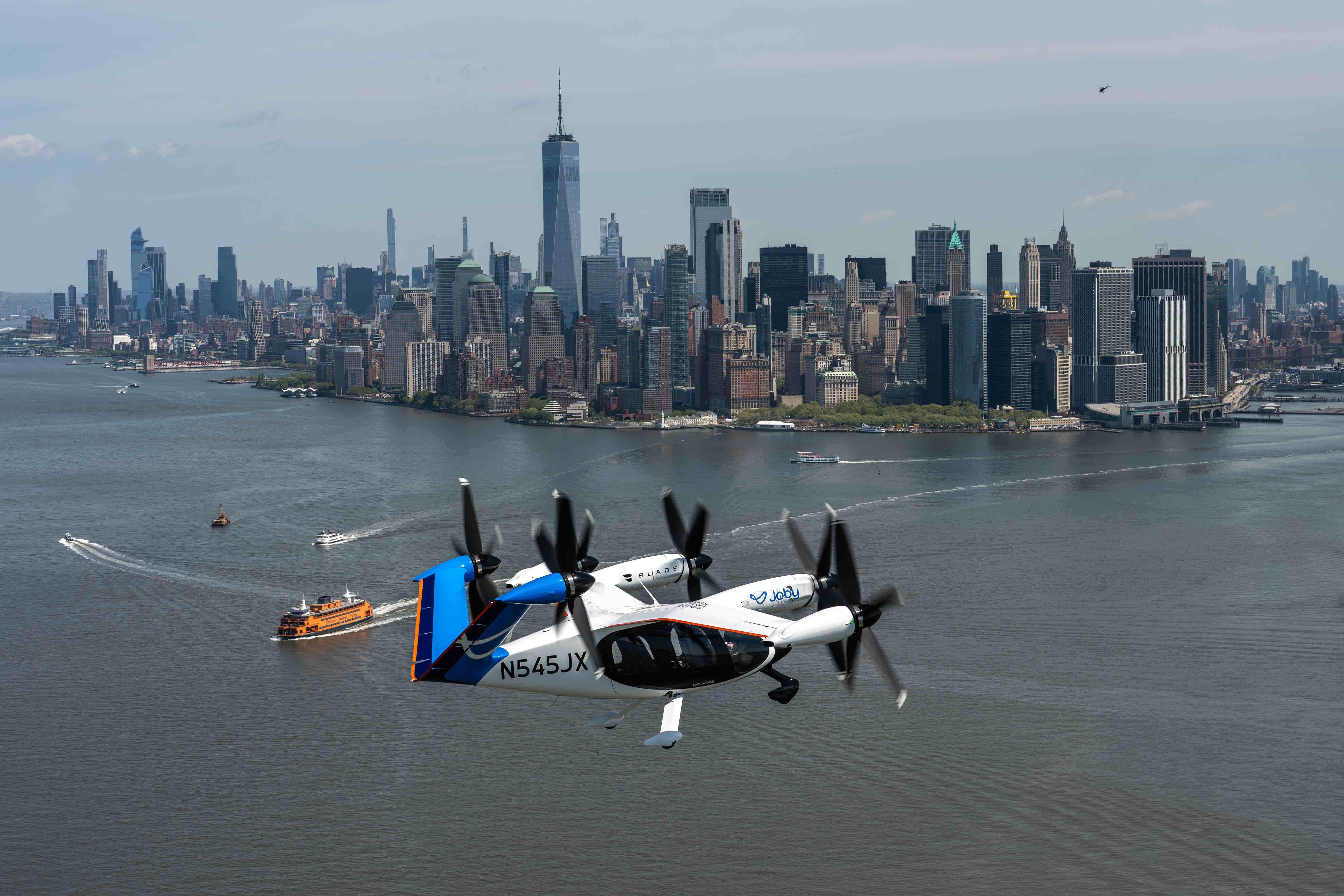
An electric air taxi is an eVTOL — electric vertical takeoff and landing — aircraft that takes off and lands like a helicopter but runs on electric motors, producing zero operating emissions and significantly less noise. This electric air taxi NYC guide covers everything riders, commuters, and city planners need to know about this emerging transportation network.
New York City is a priority launch market for four reasons:
- The metro region's road congestion makes point-to-point air travel commercially viable
- Existing heliport infrastructure reduces the cost of building new vertiports
- The Port Authority of New York and New Jersey controls key airports and airspace entry points
- High passenger density supports the route economics that eVTOL operators require
Unlike conventional helicopters, eVTOL aircraft operate at a fraction of the noise level, making urban integration politically and practically achievable in a way previous air taxi concepts were not.
How Did Joby Aviation's NYC Flight Campaign Work?
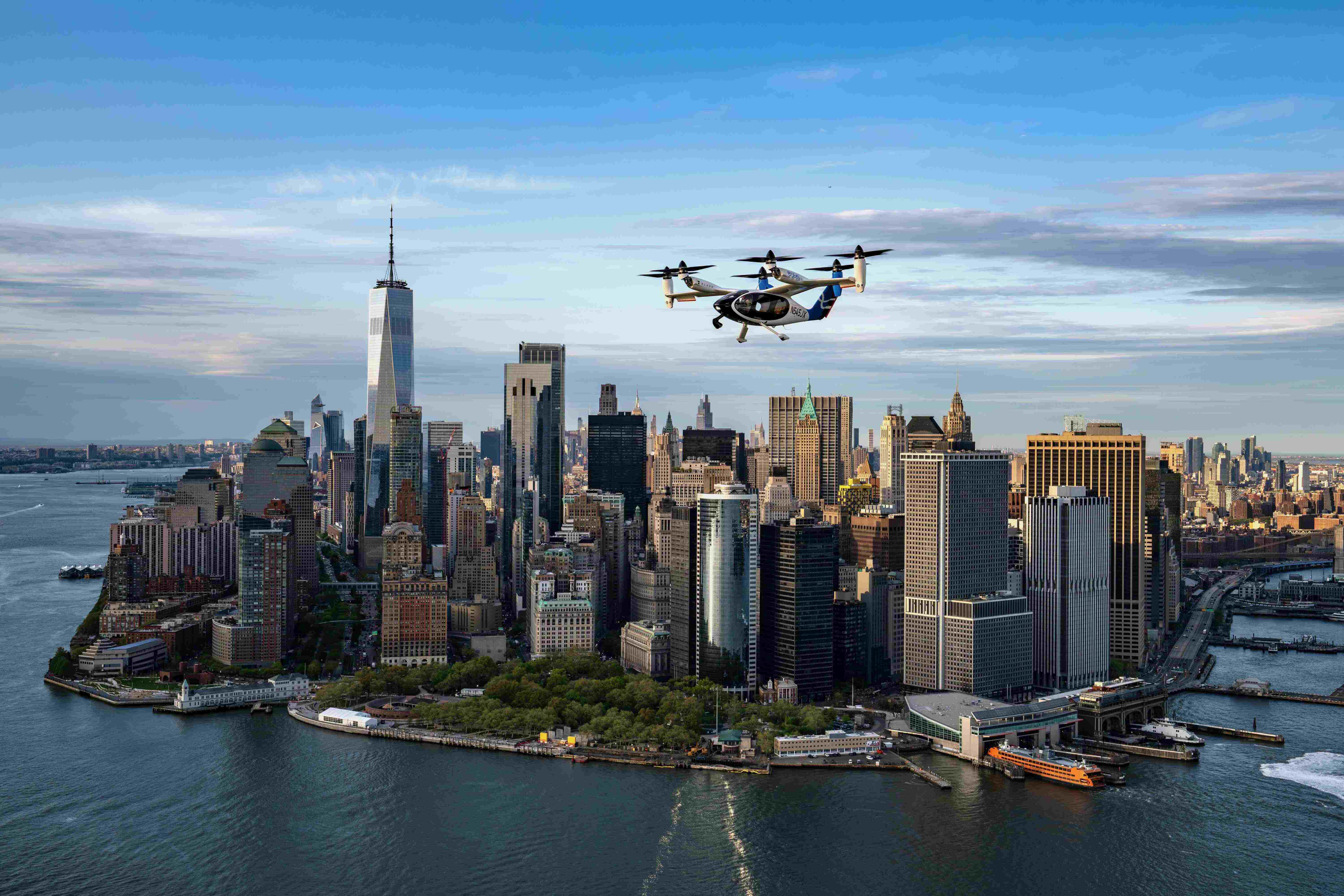
The week-long eVTOL Integration Pilot Program (EIPP) flight campaign marked a turning point for urban air mobility in New York City. Joby Aviation conducted the demonstration flights in May 2025, operating its electric air taxi aircraft across FAA-controlled airspace between Manhattan heliports and John F. Kennedy International Airport. Port Authority Executive Director Kevin O'Toole called the campaign "a glimpse into the future of urban transportation," affirming the Port Authority of New York and New Jersey's commitment to integrating eVTOL operations into the regional airport network.
The EIPP is part of a broader federal initiative: in March 2026, the U.S. Department of Transportation selected eight pilot programs nationwide where eVTOLs will be tested. Beyond urban air taxi service, the program covers regional passenger transportation, cargo delivery, emergency meal response operations, autonomous flight, and offshore energy sector transportation — making NYC one node in what the DOT describes as "one of the largest real-world testing environments for next-generation aircraft in the world." CNN
Which Routes and Heliports Were Used?
Three Manhattan departure points formed the backbone of the NYC flight campaign:
- Downtown Skyport on the East River served as a primary launch site for southbound JFK-bound flights
- West 30th Street Heliport on the Hudson River provided midtown access for point-to-point flights
- East 34th Street Heliport connected the Murray Hill area directly into the JFK route corridor
Each route demonstrated real zero-emission, point-to-point connectivity across the New York metro area, replacing what is typically a 60-to-90-minute ground journey with a flight time measured in minutes.
What Is the Joby Aircraft N545JX?
Aircraft N545JX is Joby Aviation's fifth-generation electric vertical takeoff and landing demonstrator, the specific airframe flown throughout the NYC campaign. Joby Aviation's published performance data confirms the aircraft carries one pilot and four passengers, reaches a top speed of 200 mph, and delivers a range of 100 miles per charge. The noise profile is the aircraft's most operationally significant feature — at 2,000 feet, N545JX registers approximately 45 dBA, quieter than a typical conversation. Joby Aviation founder JoeBen Bevirt has stated the aircraft is "100 times quieter than a helicopter," a figure grounded in the aircraft's distributed electric propulsion system. FAA certification progress for the Joby aircraft remains active under Part 21, placing commercial electric air taxi service in NYC within a defined regulatory pathway rather than a speculative future.
Who Is Behind Electric Air Taxis in New York City?

Six organizations are driving electric air taxi development in New York City:
- Joby Aviation — Aircraft developer and operator; manufacturer of the five-seat eVTOL certified under FAA review
- Port Authority of New York and New Jersey — Infrastructure host and airspace coordination partner across JFK, Newark, and Manhattan heliport sites
- Federal Aviation Administration — Certifying authority for eVTOL aircraft and controller of all commercial airspace
- U.S. Department of Transportation — Oversight body for the eVTOL Integration Pilot Program (EIPP)
- Delta Air Lines — Strategic investor and passenger distribution partner for Joby's commercial launch. Joby also maintains a partnership with Uber alongside its Delta Air Lines relationship, positioning the company within existing ride-hailing demand networks as it moves toward commercial launch. CNN
- Blade Air Mobility — Operator of an existing point-to-point helicopter network across the New York region that Joby's zero-emission service is positioned to complement and eventually replace
Notably, Joby completed the acquisition of Blade Air Mobility's passenger business in 2025, making Blade a wholly owned subsidiary. Prior to the acquisition, Blade had served more than 90,000 passengers through its Manhattan and New York-area airport infrastructure — a customer base and operational network that now directly supports Joby's commercial launch strategy. Joby Aviation Press Release
State-level DOT partners in Texas, Utah, Florida, and North Carolina confirm the program extends well beyond New York.
When Will Commercial Electric Air Taxi Service Launch in NYC?
Full commercial electric air taxi service in NYC depends on Joby Aviation securing FAA type certification, an operating certificate, and permanent vertiport permits — none of which are finalized. Joby has publicly targeted 2025 for commercial launch, though regulatory timelines remain outside any operator's control.
What Will an Electric Air Taxi Flight from Manhattan to JFK Cost?
Joby Aviation has not released official pricing for New York City electric air taxi flights. Joby CEO JoeBen Bevirt has stated publicly that the company's long-term pricing target is to be competitive with ground transportation — though he acknowledged that competitiveness is expected to develop over time rather than at launch. Joby's chief product officer Eric Allison similarly described the near-term goal as being "on par with a premium car service." Marketplace Yahoo Tech For context, helicopter charters from Manhattan to JFK currently run $200–$500 per seat, while Blade's airport transfer service prices the same route at around $195. A standard taxi or rideshare covers the trip for $50–$80. Industry analysts expect eVTOL operators to enter at premium price points initially, then move toward a broader market as fleet scale and operational efficiency improve.
What Does the Future of Urban Air Mobility Look Like for the NYC Region?
The eVTOL Integration Pilot Program positions NYC as a national model for urban air mobility. Joby Aviation's confirmed expansion plans include vertiport network development across the tri-state region, connecting New York and New Jersey through point-to-point flights that bypass surface congestion entirely. Groundwork for that infrastructure is already underway: led by the NYC Economic Development Corporation and partnered with Skyports Infrastructure and Vertiports by Atlantic, New York City's existing heliport infrastructure is being electrified — including eVTOL charging upgrades at city-owned heliports — specifically in anticipation of commercial air taxi service launch. Joby Aviation Press Release The Port Authority's regional airport system — including JFK, Newark, and LaGuardia — forms the backbone of that network. Zero operating emissions and a quiet acoustic profile directly address the community concerns that grounded earlier helicopter taxi operations. As FAA certification advances, the framework built in New York will guide urban air mobility integration in cities across the country.
The Future of Electric Air Taxis in NYC Is Already Taking Shape
Electric air taxi service in New York City is no longer a concept — it is an active development with real infrastructure, regulatory backing, and a certified aircraft behind it. Joby Aviation's partnership with the Port Authority of New York and New Jersey positions the region as a global proving ground for eVTOL transportation. Point-to-point flights connecting JFK and Manhattan heliports promise to cut travel time dramatically while producing zero operating emissions. The FAA certification process, the eVTOL Integration Pilot Program, and vertiport planning across the tri-state area represent concrete steps forward, not marketing promises. For New York City commuters and travelers, this shift in urban air mobility will redefine how the region moves. Follow Joby Aviation's official updates and Port Authority announcements to stay current as launch timelines firm up and the first commercial flights draw closer.